- 0308 7702 281
- hello@kidsbootcamp.pk
- 9.00am-4.00pm

About kidscamp
Why Crayon Drawing for kids Is More Than Just Coloring: Boosting Your Child’s Imagination
Why Crayon Drawing for kids Is More Than Just Coloring: Boosting Your Child’s Imagination
Crayon Drawing for kids, It’s Not Just Playtime
Most parents see Crayon Drawing for kids as a simple distraction.
A quick way to keep kids busy. A mess-maker. Something to hand over when you need a few quiet minutes.
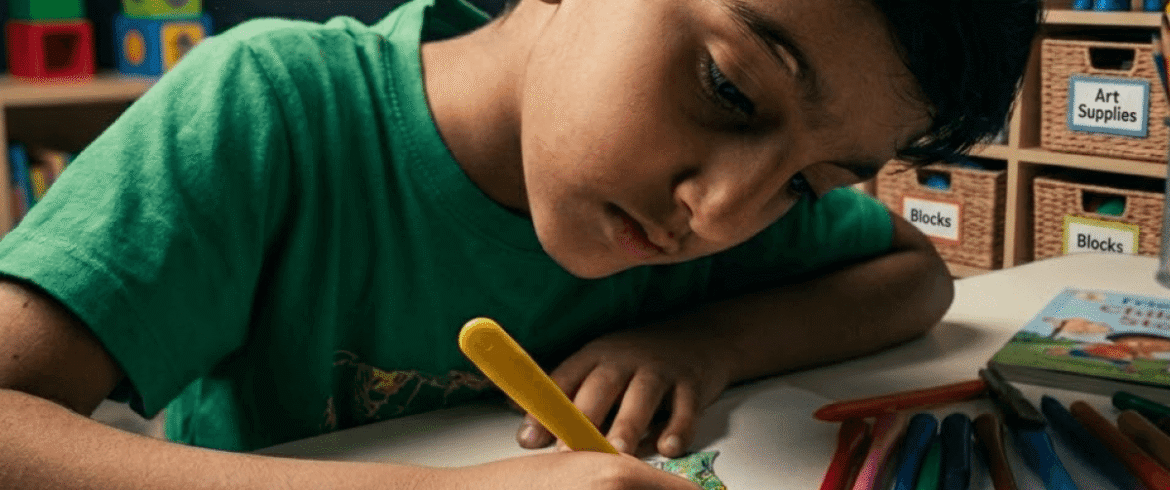
A child sits down, grabs a crayon, and starts scribbling on paper. Lines go everywhere. Colors overlap. Nothing seems structured.
At first glance, it feels random. Unplanned. Even meaningless.
But here’s the truth most people miss:
That “messy drawing” is actually one of the most powerful forms of early learning.
Because when a child draws with crayons, they are not just coloring —
they are thinking, imagining, experimenting, and expressing all at once.
And if you look closely, you’ll realize something surprising:
Every line has a purpose.
Every color has a reason.
Every drawing tells a story.
The Hidden World Behind Every Scribble
Adults often judge children’s drawings using adult standards.
We look for neatness. Proportion. Realism.
But children don’t think that way.
They don’t draw what they see.
They draw what they feel and imagine.
A simple scribble might look like nothing to you —
but to a child, it could be:
- A road leading to a secret place
- A jungle filled with hidden animals
- A stormy sky with lightning
- A superhero flying through space
The drawing is not just a picture.
It’s a representation of their internal world.
This is why two children given the same crayons and paper will create completely different drawings.
Because each child is telling a different story.
Crayons as a Tool for Thinking
Crayons might seem basic, but they activate complex mental processes in children.
Let’s break down what’s really happening when a child draws.
1. Imagination Comes to Life
Before a child draws anything, they imagine it.
They visualize shapes, characters, and scenes that don’t physically exist yet.
This ability — to create something from nothing — is the foundation of creativity.
It’s the same skill used by:
- Designers
- Engineers
- Storytellers
- Entrepreneurs
Crayon drawing is where it begins.
2. Decision-Making Skills Develop Naturally
Every drawing involves choices.
- Which color should I use?
- Where should I place this shape?
- Should this be big or small?
These may seem like small decisions, but they build confidence in thinking independently.
Instead of following strict rules, children learn to trust their instincts.
3. Problem-Solving in Action
Not every drawing goes as planned.
A line might go wrong. A color might not look right.
What happens next?
Children adapt.
They turn mistakes into new ideas.
They adjust their drawings.
They find creative solutions.
This is real-world problem-solving — happening naturally, without pressure.
4. Motor Skills and Control Improve
Crayons also help develop fine motor skills.
The way a child holds and moves a crayon strengthens:
- Hand control
- Coordination
- Precision
These skills are essential for writing, typing, and many everyday tasks.
Where Most Parents Go Wrong
Despite all these benefits, many children don’t reach their creative potential.
Why?
Because creativity often gets unintentionally restricted.
Parents and teachers sometimes say things like:
- “Stay inside the lines”
- “Draw it properly”
- “That’s not how it looks”
These instructions come from a good place — but they create limitations.
Over time, children start to:
- Doubt their ideas
- Fear making mistakes
- Focus on being “correct” instead of creative
And slowly, their imagination begins to shrink.
Creativity Needs Freedom — Not Perfection
Creativity grows in an environment where children feel safe to explore.
They need:
- Freedom to experiment
- Space to make mistakes
- Encouragement to express themselves
Instead of correcting a drawing, try understanding it.
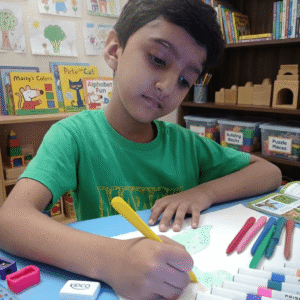
When your child shows you their art, don’t just say “nice.”
Ask questions like:
- “What’s happening here?”
- “Who is this character?”
- “Why did you choose this color?”
These questions do something powerful:
They tell your child that their ideas matter.
From Scribbles to Stories: A Better Way to Teach Art
Traditional art teaching focuses on results.
Draw this shape. Color this image. Follow these steps.
But real creativity comes from process, not perfection.
That’s why a better approach is to focus on:
- Thinking
- Storytelling
- Expression
When a child says,
“This is my jungle, and these animals are hiding,”
They’re not just drawing.
They’re:
- Building narratives
- Developing communication skills
- Strengthening imagination
This is the kind of learning that goes beyond art.
Why Creative Skills Matter More Than Ever
We’re living in a world that is changing faster than ever.
Information is everywhere. Technology is evolving. AI is growing.
In this environment, one skill stands out:
Creativity
Because while information can be accessed instantly,
the ability to think differently, imagine new ideas, and solve problems creatively is what truly sets individuals apart.
And that journey doesn’t start in high school or university.
It starts with something as simple as a crayon.
A Simple Activity Every Parent Should Try
You don’t need expensive tools or structured lessons to support your child’s creativity.
Start with this:
The “Tell Me Your Drawing” Activity
- Give your child paper and crayons
- Let them draw freely (no instructions)
- When they finish, ask them to explain their drawing
That’s it.
No corrections. No judgments.
Just listen.
You’ll discover:
- How they think
- What they imagine
- How they see the world
And most importantly, your child will feel heard and valued.
The Role of Guided Creativity
While freedom is important, guidance makes creativity stronger.
The right environment helps children:
- Refine their ideas
- Learn new techniques
- Build confidence in their abilities
This is where structured creative programs come in.
Not to control creativity —
but to nurture and expand it.
How We Approach Creativity Differently
At our Creative Kids Bootcamp, we don’t just teach kids how to draw.
We focus on helping them:
- Think creatively
- Express their ideas confidently
- Build stories through art
Instead of asking kids to copy drawings, we encourage them to:
- Create their own concepts
- Explain their artwork
- Explore different styles and tools
Because the goal is not to create perfect artists.
The goal is to develop confident, imaginative thinkers.
Final Thoughts: Every Drawing Has a Voice
The next time you see your child scribbling with crayons, pause for a moment.
Look beyond the lines.
Look beyond the colors.
Because what you’re seeing is not just a drawing.
It’s:
- An idea taking shape
- A story being told
- A mind learning to think independently
Crayons may seem simple.
But in the hands of a child, they become tools for creativity, confidence, and growth.
And with the right support, that small drawing today
can turn into big ideas tomorrow.
Ready to Unlock Your Child’s Creativity?
If you want your child to go beyond traditional learning and develop real creative confidence, our Creative Kids Bootcamp or Summer Camp is designed for exactly that.
Hands-on creative learning
Art + imagination + thinking skills
Designed for ages 5–10
Limited seats available — enroll now and give your child the space to create, think, and grow.