- 0308 7702 281
- hello@kidsbootcamp.pk
- 9.00am-4.00pm

About kidscamp
Logic & Critical Thinking
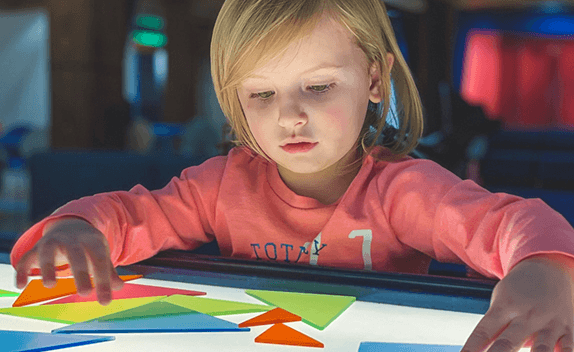
Logic & Critical Thinking
Develop higher-order thinking through challenging math puzzles and logical problems. Explore strategies for reasoning, deduction, and pattern recognition. Practice solving brain teasers and multi-step problems that require analysis. Apply logic skills to number problems, sequences, and word problems. Strengthen problem-solving techniques for both individual and group tasks. Learn to think creatively while using structured approaches to reach solutions. Prepare for competitive exams or advanced studies with critical thinking practice. Build confidence in tackling complex challenges with a systematic approach.

Time, Money & Real-Life Math
Apply math skills to everyday situations involving time and money. Learn to read clocks, calculate durations, and plan schedules effectively. Explore money management concepts, including counting, budgeting, and making change. Solve real-world problems using addition, subtraction, multiplication, and division. Develop practical skills through scenarios such as shopping, banking, or travel. Build confidence in applying mathematical concepts outside the classroom. Strengthen critical thinking and decision-making abilities. Understand the value of math in day-to-day life.

Probability & Chance
Explore the basic principles of probability and the likelihood of events. Learn to calculate outcomes for simple experiments using coins, dice, and cards. Understand concepts such as certain, likely, unlikely, and impossible events. Apply probability to everyday situations and decision-making. Develop logical reasoning by analyzing possible outcomes and patterns. Conduct hands-on activities to reinforce theoretical understanding. Learn how probability connects to statistics and real-life predictions. Build skills for strategic thinking and risk assessment.
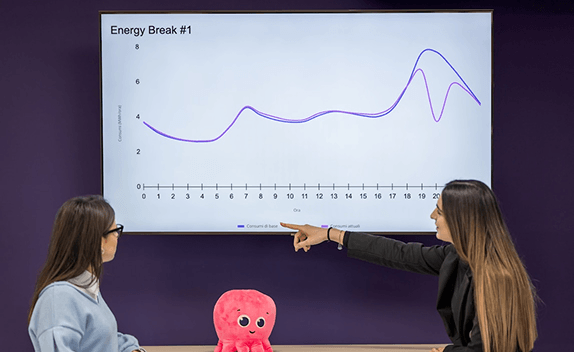
Data & Statistics
Discover how to collect, organize, and interpret data effectively. Learn to create and read charts, tables, and graphs. Explore mean, median, mode, and range to summarize data. Understand patterns and trends from collected information. Apply statistics to real-life scenarios, such as surveys or experiments. Develop analytical thinking and reasoning skills through data interpretation. Learn to make predictions based on numerical evidence. Build a strong foundation for critical thinking and informed decision-making.