Preschool registration are open now! Register now

Easy Art Activities for Preschoolers: 15 Creative Ideas

Easy Art Activities for Preschoolers: Simple Ideas for Creative Learning

A four-year-old sits at the table with a sheet of paper, three paint colours and a sponge.

You expect a flower.

Instead, there are blue circles, yellow fingerprints, a long green line and something that looks vaguely like a dinosaur.

“It’s a garden,” she explains.

That moment is easy to overlook, but it tells us something important about preschool art activities: the child’s idea matters more than whether the finished picture looks like the example an adult had in mind.

For children ages 3–5, art can be a way to explore colour, texture, movement, shapes and materials while developing fine motor control, language, confidence and problem-solving. Process-focused art in particular gives children room to make choices and experiment instead of simply copying a finished model.

The National Association for the Education of Young Children (NAEYC) recommends process-focused art experiences that give children opportunities to explore materials, make choices and create in their own ways.

The good news for parents is that you do not need an expensive art kit. Some of the best easy art activities for preschoolers can be made with paper, crayons, washable paint, recycled cardboard, leaves, glue and objects already around the house.

What Are Easy Art Activities for Preschoolers?

Easy art activities for preschoolers are simple, age-appropriate creative experiences that allow children to draw, paint, print, cut, tear, stick, mould or experiment with different materials without requiring complicated instructions.

For ages 3–5, the activity should be manageable enough for a young child to participate independently while still leaving room for imagination.

A useful rule is:

Give children materials and an invitation to create, rather than giving them a picture they must reproduce.

This is closely connected to process art, where the focus is on exploration and the child’s choices rather than producing an identical finished craft. NAEYC describes process-focused art as open-ended, child-directed and centred on experimenting with materials, tools and techniques.

That doesn’t mean structured crafts have no value. Cutting, gluing, following a few instructions and completing a simple project can also be useful. The key is to give children opportunities for both guided and open-ended creativity.
Why Is Art Important for Preschoolers?

Art gives young children a different way to think and communicate.

A child who cannot yet explain exactly how she feels may draw a storm. Another child may turn a cardboard box into a rocket. A third may spend ten minutes mixing blue and yellow paint simply to discover what happens.

These experiences can support several areas of development at the same time.

Fine motor development

Holding crayons, squeezing glue, using a paintbrush, tearing paper, manipulating clay and making small marks all give children opportunities to practise controlled hand movements.

These are useful foundations for later activities such as drawing, writing, fastening clothing and using classroom tools.

Creativity and problem-solving

Open-ended art gives children decisions to make:

  • Which colour should I use?
  • What happens if I mix these colours?
  • How can I make this shape?
  • What can I build from this cardboard?
  • What should I add next?

The child is not simply following instructions. They are making choices.

Young children’s learning and development are strongly influenced by the experiences and interactions they have in their everyday environments.

Language development

Art can also become a conversation.

Instead of asking only, “What did you draw?”, try:

“Tell me about your picture.”

That small change gives the child an opportunity to describe ideas, materials, colours, characters and experiences. NAEYC notes that process art can support children’s expressive language as they talk about their creations and choices.

Confidence and self-expression

There is no single correct answer when a child is making an abstract painting.

That freedom can be valuable. Children can try something, change it, start again and discover that their ideas are worth sharing.

15 Easy Art Activities for Preschoolers Ages 3–5

You don’t need to try all of these in one week. Pick one activity, prepare a small workspace and let your child explore.

1. Sponge Printing

Cut a clean kitchen sponge into simple shapes such as circles, squares or triangles.

Place a small amount of washable paint on a plate. Let your child dip the sponge into the paint and press it onto paper.

Soon the page becomes a collection of dots, shapes and patterns.

Try asking:
“What happens when you put two shapes together?”

Learning opportunities: shape recognition, colour exploration, hand control and pattern-making.

2. Leaf Printing

Take a short walk and collect a few fallen leaves.

Place paint on the textured side of a leaf, press it onto paper and lift it carefully.

Children can compare the marks made by different leaves.

In Multan and other parts of Pakistan, this can be an especially nice way to connect indoor creative work with the natural environment around children.

Try asking:
“Which leaf made the biggest print?”

Learning opportunities: observation, texture, comparison and nature exploration.

3. Finger Painting

Put two or three washable, child-safe paint colours on a large sheet of paper.

Let your child use fingers, fingertips or the whole hand to make lines, dots, swirls and patterns.

You don’t need to tell them what to paint.

The interesting part may be watching what happens when colours meet.

Try asking:
“What happened when these two colours touched?”

Learning opportunities: sensory exploration, colour mixing and self-expression.

4. Cotton Bud Dot Painting

Give your child cotton buds and small amounts of washable paint.

They can create dots to make flowers, rain, balloons, animals or completely abstract patterns.

For younger preschoolers, keep the design open-ended rather than expecting a specific picture.

Try asking:
“Can you make a pattern with your dots?”

Learning opportunities: hand control, visual patterns and concentration.

5. Torn Paper Collage

You don’t always need scissors for a collage.

Give children pieces of coloured paper and let them tear them into large and small pieces. They can arrange and glue the pieces onto another sheet.

The final result might become a tree, a house, a rainbow or something entirely unexpected.

Try asking:
“Which pieces would you like to put next to each other?”

Learning opportunities: fine motor control, composition, colour and decision-making.

6. Recycled Cardboard Creations

Before throwing away a small cardboard box, tube or food carton, ask whether it could become something else.

A box can become a house.

A cardboard tube can become a telescope.

Several pieces can become a robot, vehicle or imaginary machine.

Provide paint, glue, paper and child-safe decorative materials and let the child decide what the object will become.

This type of activity can also introduce an early STEAM mindset: design, build, test, change and try again.

7. Nature Collage

Collect safe natural materials such as fallen leaves, petals and small twigs.

Arrange them on paper and glue them down with adult supervision.

Children can create a landscape, animal, pattern or completely abstract design.

Try asking:
“Which natural material feels rough? Which one feels smooth?”

Learning opportunities: sensory awareness, observation, vocabulary and creativity.

8. Marble Rolling Art

Place a sheet of paper inside a shallow box or tray.

Dip a marble into washable paint, place it in the tray and slowly tilt the tray so the marble rolls across the paper.

The child gets to watch movement create lines.

Try asking:
“What do you think will happen if you tilt the tray this way?”

Learning opportunities: cause and effect, movement, prediction and visual exploration.

For safety, this should be a supervised activity because marbles are small objects.

9. Shape Monster Collage

Cut large circles, squares and triangles from coloured paper.

Let children combine the shapes to create funny monsters.

One child may make a monster with triangle ears. Another may create one with six eyes.

Add crayons or markers for details.

Try asking:
“How many shapes did your monster use?”

Learning opportunities: shapes, counting, vocabulary, creativity and fine motor skills.

10. Painting With Household Objects

Paintbrushes are not the only tools children can use.

Try clean objects such as:

  • Sponges
  • Cardboard tubes
  • Bottle bottoms
  • Large leaves
  • Toy wheels
  • Forks, with supervision
  • Bubble wrap

Dip an object into paint and see what kind of mark it makes.

This is particularly useful when you want simple art activities for preschoolers that do not require specialist supplies.

11. Crayon Texture Rubbing

Place paper over a textured surface such as a leaf or another safe textured object.

Use the side of a crayon and gently rub across the paper.

The hidden texture begins to appear.

Children often find the reveal surprisingly exciting.

Try asking:
“What do you think is underneath the paper?”

Learning opportunities: observation, texture, pressure control and prediction.
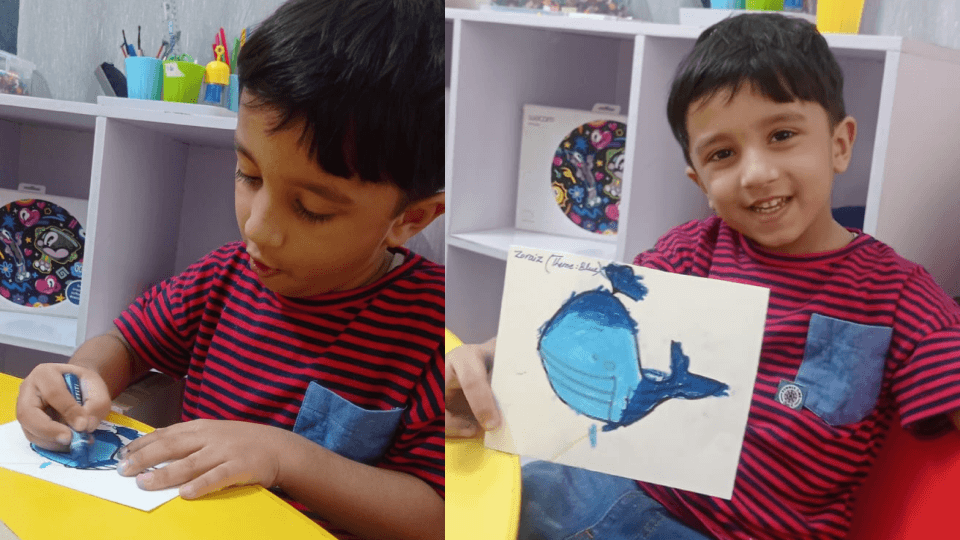


12. Colour Mixing Experiment

Give your child two paint colours at a time.

For example:

  • Blue + yellow
  • Red + yellow
  • Blue + white

Ask them to mix the colours and observe what changes.

This turns an art activity into a tiny science investigation.

Instead of telling them the answer first, let them discover it.

Try asking:
“What colour do you think we will make?”

Learning opportunities: colour recognition, prediction, observation and early scientific thinking.

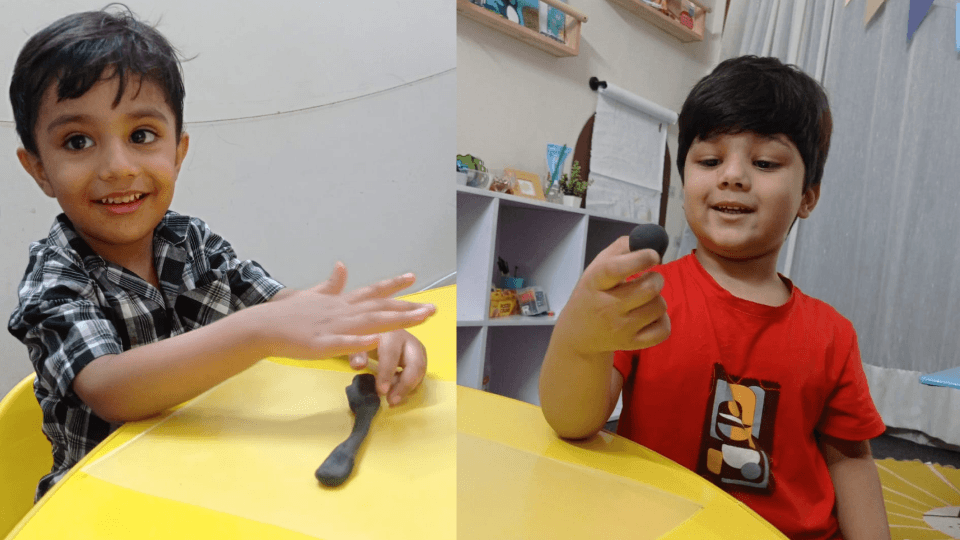
13. Play Dough Sculpting

Homemade or child-safe play dough can become an art material.

Invite your child to roll, pinch, flatten, twist and combine the dough.

They might create food for a pretend restaurant, animals, flowers or imaginary characters.

There doesn’t have to be a finished model.

Sometimes the most useful part is simply manipulating the material.
easy art activities for preschoolers

Learning opportunities: hand strength, fine motor control, imagination and sensory exploration.

14. Paint to Music

Put on a piece of music and give your child paper and washable paint.

Rather than asking them to paint an object, invite them to respond to the music using lines, dots, swirls and colours.

Fast music might inspire quick marks. Slow music may encourage longer, slower strokes.

There is no correct painting.

Try asking:
“What kind of line does this music make you want to draw?”

Learning opportunities: listening, movement, emotional expression and creative interpretation.

15. Big Collaborative Mural

Tape a large sheet of paper to the floor or a suitable wall.

Let two or more children draw or paint on the same piece of paper.

They can add roads, trees, houses, animals, people, planets or anything else they imagine.

This is one of the more social creative activities for kids ages 3–5 because children have to share space and notice each other’s ideas.

Try asking:
“What can we add to our picture together?”

Learning opportunities: cooperation, communication, creativity and spatial awareness.

A four-year-old can spend twenty minutes carefully building a tower from blocks, another ten minutes pretending the floor is lava, and then suddenly refuse to sit through a five-minute worksheet.For many parents, this can be confusing. Is my child learning enough? Should preschool involve more writing? Why does my child learn so much when they're playing but lose interest when asked to sit still?The answer often comes down to how young children learn.Good preschool activities aren't simply ways to keep children busy. When thoughtfully planned, they give children opportunities to move, experiment, communicate, create, solve problems and make sense of the world around them.That is particularly important when families are choosing a preschool in Multan, where parents may be looking for an environment that balances early academics with confidence, social development, creativity and practical skills.

Which Art Activities Are Best for Children Ages 3–5?

There isn’t one activity that is best for every preschooler.

A three-year-old may enjoy squeezing paint onto paper and exploring texture, while a five-year-old may be ready to plan a collage or build a recycled-material sculpture.

A simple age guide can help:

AgeGood starting activities
Around 3Finger painting, sponge printing, large crayons, simple collage
Around 4Painting, stamping, tearing and gluing, play dough, nature collage
Around 5Mixed-media art, printmaking, recycled construction, collaborative projects

These are starting points, not strict developmental rules. Children develop at different rates, so the right activity is one that is safe, manageable and interesting for the individual child.

Should Preschool Art Be About the Finished Product?

Not always.

If every child is expected to produce the same paper flower, there is limited room for individual decision-making. Process-focused art takes a different approach: the adult prepares suitable materials and creates the conditions for exploration, while the child decides what to do with them.

That doesn’t mean parents should never do crafts with a specific outcome.

A guided activity can teach children to follow directions, sequence steps and practise particular skills.

The better approach is to give children both experiences.

Some days can be:

“Let’s make a paper butterfly.”

Other days can simply be:

“Here are some paper, leaves, glue and crayons. What can you make?”

That balance gives children structure without taking away their creativity.

How Can Parents Make Art Time Easier at Home?

The biggest challenge is often not the activity itself. It’s the preparation and the mess.

A few simple habits can make creative time much easier.

Keep an “art box”

You can collect:

  • Scrap paper
  • Cardboard
  • Old magazines
  • Paper tubes
  • Crayons
  • Washable markers
  • Child-safe glue
  • Sponges
  • Leaves and other safe natural materials
  • Washable paint

You don’t need to buy everything at once.

Protect the workspace

Use an old tablecloth, newspaper or washable mat underneath the activity.

For paint-heavy activities, an outdoor area or easy-to-clean surface can make cleanup less stressful, particularly during warmer months in Pakistan.

Offer fewer choices

Sixteen colours and twenty materials can be overwhelming.

Start with two or three colours and a small selection of tools.

You can introduce more materials once the child begins exploring confidently.

Don’t fix the artwork

If your child says the purple sun is a sun, it is a sun.

You don’t need to correct it.

Ask about the idea instead.

“Tell me about your purple sun.”

That conversation is often more valuable than making the picture look realistic.

How Can Art Become a Learning Activity Without Feeling Like a Lesson?

The easiest way is to add questions rather than worksheets.

During sponge printing, talk about shapes.

During colour mixing, make predictions.

During collage, count pieces.

During clay work, describe texture.

During painting, talk about movement.

For example, a simple leaf-printing activity can involve art, science and language at the same time:

Art: making a print
Science: observing texture
Math: comparing sizes
Language: describing the leaf
Motor development: pressing and lifting the leaf

This is one reason hands-on creative experiences fit naturally into a child-centred, STEAM-oriented early learning environment.

The activity doesn’t have to be labelled a “lesson” for meaningful learning to happen.
What Should Parents Look for in Preschool Art Activities?

When choosing preschool craft activities, look beyond the photograph of the finished product.

Ask:

  1. Can my child participate independently?
  2. Are the materials appropriate and safe for their age?
  3. Does the activity allow some choice?
  4. Can my child experiment rather than simply copy?
  5. Does it involve hands-on interaction?
  6. Is there room for conversation?
  7. Can the activity be adapted for different abilities?
  8. Will my child enjoy the process?

A beautiful craft made mostly by an adult may look impressive, but it tells you little about what the child actually explored.

A page covered in a child’s uneven lines may look simple. Educationally, it can represent much more: choices, movement, experimentation and expression.

Common Mistakes to Avoid During Preschool Art

Doing the project for the child

It can be tempting to “help” until the artwork looks perfect.

Try stepping back instead.
easy art activities for preschoolers

Giving too many instructions

A long sequence of instructions can turn creative play into a test of memory.

Keep directions short and demonstrate only when necessary.
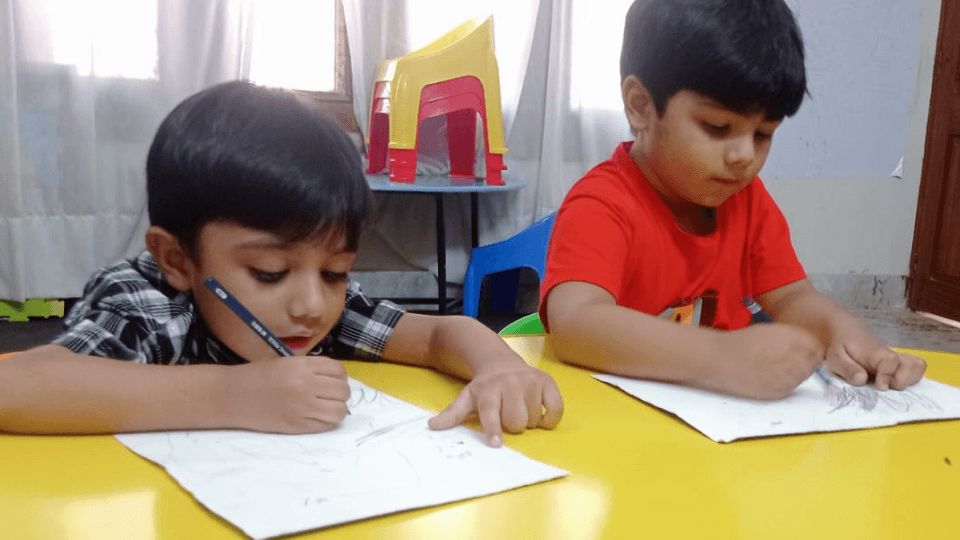
easy art activities for preschoolers

Expecting children to stay clean

Art is often sensory.

Use washable materials and protect the workspace rather than making children afraid of getting paint on their hands.

Comparing artwork

“Look how nicely your friend did it” can make children focus on comparison rather than exploration.

Talk about what you notice instead:

“I see you used lots of circles.”

Asking, “What is it?”

Sometimes the child doesn’t know yet.

Try:

“Tell me about what you’re making.”

That leaves room for the idea to develop.

Easy Art Activities in a Pakistani Preschool Setting

Art doesn’t need to be disconnected from children’s surroundings.

A preschool in Multan can use leaves collected from the school garden, recycled packaging, local flowers, seasonal colours, cardboard boxes and everyday household objects as creative materials.

A classroom might explore:

  • Leaf printing after a nature walk
  • Mango-inspired colour mixing during mango season
  • Recycled cardboard construction
  • Clay modelling
  • Pattern-making with traditional shapes
  • Nature collages
  • Large collaborative paintings
  • Texture exploration using safe everyday materials

The important part is not making an activity look “local” for the sake of it. It is giving children opportunities to connect what they see in their everyday environment with what they create.

For families looking for kids activities in Multan, this kind of hands-on art can also be a simple alternative to activities that depend heavily on screens.

How Art Fits Into Child-Centred Early Learning

At Kids Bootcamp & Preschool, creative work can sit alongside movement, storytelling, science, mathematics and practical exploration rather than being treated as an isolated “craft period.”

Quality early childhood education supports children’s development across multiple areas rather than treating learning as a collection of isolated skills.

That approach matters because children do not naturally separate their curiosity into school subjects.

A child painting a tree may start talking about leaves.

That may lead to counting leaves.

Counting may lead to comparing sizes.

Then the child may wonder why some leaves are green and others are yellow.

One simple art activity can open the door to several kinds of learning.

Play-based experiences give young children opportunities to explore, interact, experiment and learn through active participation.

This is the strength of meaningful creative activities for kids ages 3–5: they can begin with something as simple as a paintbrush and end with a question.

A Simple Takeaway for Parents

You don’t need a Pinterest-perfect setup to encourage creativity.

Start with paper.

Add crayons, washable paint, glue, recycled cardboard or something from nature.

Then give your child time.

Instead of asking, “What are you supposed to make?”, try asking, “What would you like to try?”

That small change gives children ownership of the experience.

And sometimes, the best preschool artwork is not the picture you can immediately recognise. It is the messy page that makes a child stop, look at it proudly and say:

“Look what I made!”

That is where creativity begins.

FAQs

What are some easy art activities for preschoolers?

Some easy options include sponge printing, finger painting, leaf printing, torn-paper collage, nature collage, play dough sculpting, cardboard construction, crayon rubbing and simple colour-mixing activities. Choose materials that are safe and manageable for the child’s age, and allow room for experimentation.

Three-year-olds can usually begin with simple, hands-on activities such as large-crayon drawing, finger painting, sponge stamping, tearing paper, basic collage and play dough. Keep instructions short and focus more on exploration than producing a particular finished picture.

Children ages 4–5 can explore painting, printmaking, mixed-media collage, nature art, recycled-material construction, clay or play dough, collaborative murals and simple colour experiments. Activities can gradually include more planning and decision-making as children become comfortable with the materials.

Many art experiences involve movements such as gripping crayons, squeezing glue, using brushes, tearing paper, manipulating clay and placing small pieces. These activities provide opportunities to practise hand and finger control while children are engaged in a meaningful task.

They can sometimes follow a model, especially when learning a particular technique. However, children also benefit from open-ended process art where they can choose materials, colours and methods. NAEYC recommends process-focused experiences that give children time and space to explore and create their own work.

Use washable materials, cover the working surface with an old cloth or newspaper, limit the number of materials available at one time and keep cleanup supplies nearby. Outdoor art can also be useful for activities involving larger amounts of paint or water.

A basic home art box can include paper, crayons, washable markers, child-safe glue, washable paint, sponges, cardboard, paper scraps and play dough. You can also add safe recycled materials and natural objects such as fallen leaves.

There is no single ideal duration. Follow the child’s interest and attention. A simple activity may last only a few minutes, while a child who is deeply engaged may continue much longer. It is usually better to stop while the experience is still enjoyable than to force a child to finish.

Preschool Activities in Multan: A Helpful Parent’s Guide

A four-year-old can spend twenty minutes carefully building a tower from blocks, another ten minutes pretending the floor is lava, and then suddenly refuse to sit through a five-minute worksheet.
For many parents, this can be confusing. Is my child learning enough? Should preschool involve more writing?

Why does my child learn so much when they’re playing but lose interest when asked to sit still?

The answer often comes down to how young children learn.Good preschool activities aren’t simply ways to keep children busy. When thoughtfully planned, they give children opportunities to move, experiment, communicate, create, solve problems and make sense of the world around them.

That is particularly important when families are choosing a preschool in Multan, where parents may be looking for an environment that balances early academics with confidence, social development, creativity and practical skills.

What Are Preschool Activities?

Preschool activities are age-appropriate learning experiences designed to help young children develop skills through play, exploration, movement, conversation and hands-on practice.

For a three- or four-year-old, learning might look like sorting buttons by colour, building a structure with blocks, tracing letters in sand, identifying shapes, watering plants or working with classmates on a simple project.

The activity may appear simple to an adult. For the child, however, several skills can be developing at the same time.

A shape-matching game, for example, can involve visual recognition, hand-eye coordination, vocabulary, concentration and problem-solving—not just learning the names of shapes.

Why Do Preschool Activities Matter?

Young children learn through active interaction with people and their surroundings. Activities allow them to practise skills instead of only hearing about them.

A child who is pouring water between containers is experimenting with quantity. A child building with blocks is making decisions about balance and structure. A child working with another child is practising communication, patience and cooperation.

This is why effective early childhood learning doesn’t have to separate “learning” and “play” as sharply as adults sometimes do.

1. They develop fine motor skills

Activities such as threading, clay modelling, tearing and pasting paper, tracing, drawing and using child-safe tools can help children practise controlled hand movements.

These foundations are useful later when children begin handling pencils, scissors and other classroom materials with greater independence.

2. They encourage language development

A simple activity can become a conversation.

“What do you think will happen?”

“Which one is bigger?”

“Why did your tower fall?”

“Can you tell me about your picture?”

These small conversations encourage children to describe, compare, explain and ask questions.

3. They build social skills

Preschool isn’t only preparation for reading and mathematics. Children are also learning how to participate in a group.

Taking turns, sharing materials, listening to another child, asking for help and resolving small disagreements are all meaningful parts of early childhood learning.

4. They encourage problem-solving

Instead of immediately giving a child the correct answer, an activity can give them a problem to investigate.

For example, if a block tower keeps falling, the adult might ask, “What could we change?”

The child gets an opportunity to test an idea, notice what happens and try again.

That process is more valuable than simply being told where to put the block.

What Preschool Activities Can Children Do in Multan?
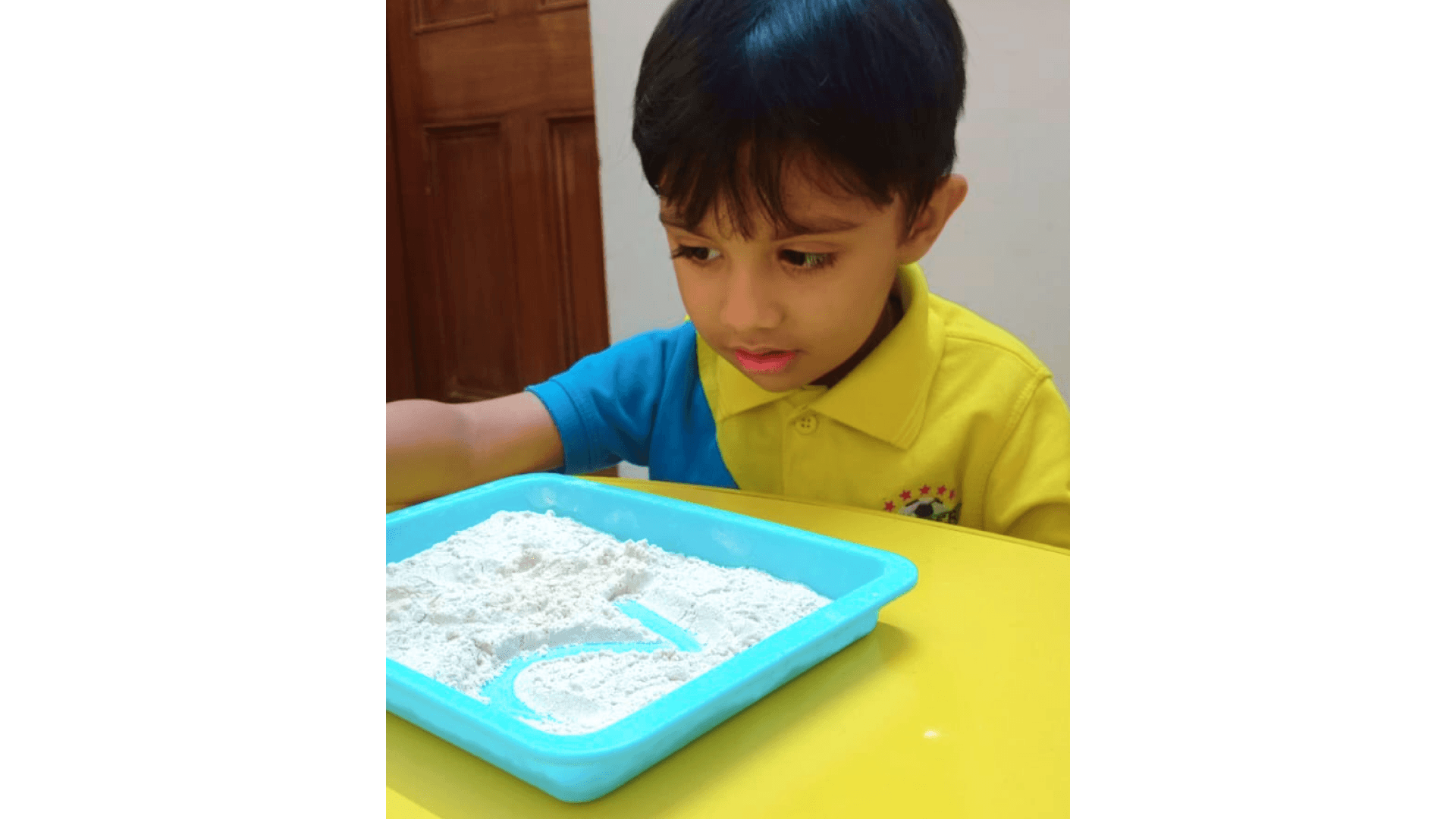
Families looking for preschool activities in Multan don’t necessarily need complicated or expensive resources. Some of the most valuable experiences can be built around everyday materials and the child’s immediate environment.

Sensory and hands-on activities

Young children naturally explore through their senses.

preschool activities in Multan

Preschool classrooms can use activities involving:

-Sand and textured materials
-Water play
-Clay and play dough
-Natural objects
-Colour mixing
-Sorting and matching
-Simple cooking or food-related activities
-Safe sensory trays

For example, tracing letters or shapes through a tray of sand can combine sensory exploration with early writing practice.

Art and creative activities

Art gives children a way to make decisions rather than simply reproduce a finished example.

Children can experiment with:

-Painting
-Drawing
-Collage
-Clay modelling
-Printing
-Cutting and pasting
-Nature-inspired artwork

The objective shouldn’t always be a perfect-looking craft. The process—choosing materials, experimenting and explaining what they made—can be equally important.


preschool activities in Multan


Early maths activities

Preschool mathematics can begin long before formal arithmetic.

Children can explore mathematical ideas by:

-Sorting objects
-Matching quantities
-Comparing sizes
-Identifying shapes
-Counting everyday objects
-Creating patterns
-Grouping items by colour
-Exploring more and less

A teacher might place one group of objects beside another and ask children which has more. Instead of simply memorising a number, the child gets to see the concept.

Language and literacy activities

Early literacy can be playful.

Activities may include:

-Picture-book reading
-Rhymes
-Story discussions
-Letter recognition
-Sound games
-Sand or tray tracing
-Picture sequencing
-Urdu and English vocabulary activities

For preschoolers in Pakistan, exposure to both Urdu and English can also be incorporated naturally into classroom routines, stories, songs and conversations.

STEAM activities

STEAM—Science, Technology, Engineering, Arts and Mathematics—can be introduced to young children without turning preschool into a technical classroom.

A simple building challenge can involve engineering and mathematics. Mixing colours introduces basic scientific observation. Creating a model from recycled materials combines design, creativity and problem-solving.

The emphasis should remain age-appropriate and hands-on.

preschool activities in Multan

What Makes a Good Preschool Activity?

A good preschool activity isn’t necessarily the one that looks the most impressive in a photograph.

It should have a clear developmental purpose while still leaving children room to explore.

Parents can ask:

Does my child get to do something?
Hands-on participation is generally more meaningful than watching an adult demonstrate everything.

Is there room for choice?
Children benefit when they can make small decisions about materials, colours, construction or the way they approach a task.

Is it appropriate for their age?
A preschool activity shouldn’t feel like a primary-school worksheet simply because adults want visible academic output.

Can children make mistakes?
Activities should allow experimentation rather than making children afraid of getting the “wrong” answer.

Does the adult interact with the child?
A thoughtful teacher observes, asks questions and extends children’s thinking instead of taking over the activity.

How Should Parents Choose a Preschool in Multan?

Choosing a preschool involves more than looking at the classroom, fee or number of worksheets sent home.

When visiting a preschool in Multan, watch what the children are actually doing.

Are they moving around appropriately? Are teachers speaking respectfully to them? Are children given opportunities to ask questions? Is there time for creative work, physical movement and social interaction?

It is also worth asking how the school approaches:

-Early literacy
-Early mathematics
-Social-emotional development
-Outdoor or physical activity
-Creative expression
–
Classroom routines
-Screen use
-Parent communication
-Safety and supervision
-Individual differences between children

A strong preschool should be able to explain why it uses particular activities, not simply tell parents that the children “have lots of activities.”

Preschool Activities in Multan Need Local Thinking Too

Early learning doesn’t happen in isolation from a child’s environment.

In Multan, families and schools have to consider the local climate, routines and community. During particularly hot periods, for example, physical and outdoor experiences may need to be planned around cooler parts of the day, with indoor activities providing meaningful alternatives.

Local experiences can also become learning opportunities.

Children might explore plants, observe insects, talk about fruits and vegetables, investigate weather, work with natural materials or learn about their community.

A child doesn’t need an expensive educational toy to investigate the world.

Sometimes a mango, a handful of soil, a few blocks or a cup of water can become the starting point for a surprisingly rich learning experience.

How Can Parents Continue Preschool Learning at Home?

Parents don’t need to recreate a classroom at home.

Instead, look for opportunities already present in everyday life.

While preparing food, ask your child to identify colours, count pieces or compare sizes. During a walk, look for shapes, leaves or insects. While tidying toys, ask your child to sort objects into groups.

Even a few minutes of purposeful conversation can turn an ordinary routine into a learning opportunity.

The important thing is not to turn every moment into a lesson. Children also need unstructured time to play, imagine and simply be children.

How Can Parents Continue Preschool Learning at Home?

Children develop at different rates, so age should be treated as a general guide rather than a strict timetable.

Age Suitable activity examples Skills being encouraged
3 years Sorting, sensory play, simple puzzles, rhymes Language, coordination, attention
4 years Shape matching, clay, tracing, counting games Fine motor skills, early maths, creativity
5 years Building challenges, story sequencing, simple experiments Problem-solving, communication, early academic skills


The same activity can also be adjusted according to a child’s ability.

A three-year-old might simply match two shapes. An older preschooler could classify several shapes, describe their properties and create a picture using them.

What Parents Should Look For Beyond Academic Activities

One of the easiest mistakes when evaluating preschool is focusing only on visible academic work.

A child holding a pencil correctly, recognising letters or counting to ten is useful. But preschool also provides opportunities to develop less visible skills.

Can the child:

-Ask for help?
-Wait for a turn?
-Follow a simple routine?
-Express an idea?
-Try again after making a mistake?
-Work alongside another child?
-Take responsibility for simple classroom tasks?
-Communicate what they need?

These skills matter because school readiness isn’t simply about knowing letters and numbers. Children are also preparing to participate in a learning community.

A Better Way to Think About Preschool

Imagine two children given the same pile of blocks.

One immediately begins building. Another watches. A third starts sorting them by colour.

There isn’t necessarily one “correct” way to approach the activity.

A thoughtful early-learning environment gives children enough freedom to explore while teachers provide the structure and questions that help extend their thinking.

That balance—structure without unnecessary pressure, and freedom without a lack of purpose—is one of the most important things parents can look for when exploring early childhood programs.

For families searching for preschool activities in Multan, the bigger question isn’t simply “How many activities does the school offer?”

A better question is:

“What is my child learning while doing them?”

At Kids Bootcamp & Preschool, activities can be designed around play, exploration, creativity, STEAM and practical experiences so that children have opportunities to build skills while actively participating in their learning journey.

If you’re exploring early learning options, visiting a preschool and observing a real classroom can tell you far more than a brochure. Look at the children, listen to the teachers and ask what each activity is helping children practise.

FAQs

What are the best preschool activities in Multan?

Good preschool activities in Multan include sensory play, art, clay work, shape and number games, storytelling, rhymes, building challenges, nature exploration and simple STEAM activities. The best activities are age-appropriate, hands-on and connected to specific developmental goals.


Many children begin preschool around ages 3–5, although the appropriate starting age depends on the child’s development, family circumstances and the program’s structure. Parents should consider readiness for group routines, communication, independence and separation from caregivers.


Yes. Play can provide opportunities for children to practise language, social interaction, problem-solving, creativity, movement and early academic concepts. The value comes from purposeful play supported by appropriate materials and responsive adults.


Good preschool activities in Multan include sensory play, art, clay work, shape and number games, storytelling, rhymes, building challenges, nature exploration and simple STEAM activities. The best activities are age-appropriate, hands-on and connected to specific developmental goals.


Look beyond worksheets and decorations. Observe teacher-child interactions, classroom safety, cleanliness, learning activities, opportunities for movement and creativity, social development, communication with parents and how the school responds to individual children’s needs.


Activities such as drawing, threading, clay modelling, tearing paper, puzzles and age-appropriate cutting can give children opportunities to practise hand and finger coordination. These skills support later tasks such as writing and using classroom tools.


Use everyday objects rather than buying specialised equipment. Sorting laundry by colour, counting fruit, building with blocks, reading together, drawing, making simple patterns and discussing what children observe outdoors can all provide useful learning opportunities.

Yes, when they are adapted to the child’s developmental level. Preschool STEAM can involve building, observing, sorting, experimenting, creating and asking questions rather than formal technical instruction.


Social skills are a major part of early childhood development. Children have opportunities to practise sharing, turn-taking, communication, cooperation, listening and managing everyday interactions with peers and adults.


Coding for Kids in Pakistan: Meet Shafay, 7-Year-Old New Coder from Multan | Chapter 1: Sequences

Is coding for kids in Pakistan really possible at age 7? Meet Shafay from Multan — a first-grader who’s already writing code on CodeMonkey and learning about sequences with the help of Kids Bootcamp. This is his story.

Introduction: Coding for Kids in Pakistan — Starting at Age 7 in Multan

Hi! My name is Shafay. I am 7 years old and I live in Multan, Pakistan. And guess what? I can code!

Most kids my age are playing with toys or watching cartoons. But I am learning something really cool — I am learning how to talk to computers. That’s what coding is. It’s like giving instructions to a computer in a special language so it does exactly what you want.

Today, I want to tell you about something amazing I learned: sequences. I learned it on CodeMonkey, which is a really fun coding website for kids. And I could not have done it without Kids Bootcamp, which is a program that teaches kids like me how to code step by step.

If you are a parent reading this, or maybe a kid who wants to start coding, I hope my story helps you. Because if a 7-year-old from Multan can do it — so can you!

What Is Coding and Why Should Kids Learn It?

Before I tell you what I learned today, let me explain what coding is — in the way that I understand it.

Coding is like giving your computer a recipe. When your mom makes biryani, she follows steps: first wash the rice, then cook the meat, then mix everything together. If she does the steps in the wrong order, the biryani won’t taste right!

Coding works the same way. You give the computer a list of steps. The computer follows those steps exactly. If the steps are right, the computer does the right thing. If the steps are wrong, something funny happens — and you have to fix it!

Why Should Kids Learn to Code?

Lots of grown-ups ask: “Why should my child learn coding so young?” Here are some really good reasons:

1. Coding is the future. Almost every job in the future will need people who understand computers. Doctors, artists, engineers, teachers — they all use computers now. Learning to code early gives kids a big head start.

2. Coding teaches problem-solving. When your code doesn’t work, you have to think about WHY. This makes your brain stronger. It’s like a puzzle every single day.

3. Coding is fun! Seriously. When I make something move on the screen because of MY code, I feel so happy. It’s like magic — but I’m the magician!

4. Pakistan needs young coders. Pakistan is growing fast in technology. Cities like Multan, Lahore, and Karachi are becoming tech hubs. Young coders from Pakistan can help build amazing things for the whole world.

What Is CodeMonkey? The Best Coding Platform for Kids

CodeMonkey is a website where kids learn to code by playing games. It is one of the most popular coding platforms for children in the world, and I understand why — it is SO much fun.

In CodeMonkey, you help a little monkey collect bananas. But the monkey won’t move by itself. YOU have to write code to tell the monkey where to go. If your code is right, the monkey gets the banana. If your code is wrong, the monkey gets lost!

Why CodeMonkey is Great for Young Coders

  • It’s visual and colorful — you can see exactly what your code does on screen
  • It starts simple — even a 7-year-old can understand the first lessons
  • It teaches real coding concepts — not fake stuff, but real ideas that big programmers use
  • It uses CoffeeScript — a real programming language that teaches you logic
  • It gives you stars and rewards — so you always want to keep going

I have been using CodeMonkey as part of my training with Kids Bootcamp, and every day I learn something new. Today’s big lesson was about sequences — and it changed the way I think!

Today’s Big Lesson: What Is a Sequence in Coding?

Okay, here is the most important part of my blog. Today, I learned about sequences.

A sequence in coding means: a set of instructions that the computer follows one by one, in order.

Let me explain with a simple example.

Imagine I want to walk from my room to the kitchen. Here is my sequence:

  1. Stand up
  2. Open the door
  3. Walk down the hallway
  4. Turn left
  5. Enter the kitchen

If I do step 5 before step 3, I will bump into a wall! The order matters. That’s what a sequence is — steps in the right order.

Sequences in CodeMonkey

In CodeMonkey, I wrote a sequence to help the monkey get the banana. Here is what it looked like (in simple words):

move forward 3 steps
turn right
move forward 2 steps
pick up banana

If I changed the order — like picking up the banana before moving forward — it would not work! The monkey would try to grab something that isn’t there yet.

This is the magic of sequences. The order of your instructions is everything.

Why Sequences Are the Foundation of All Coding

My teacher at Kids Bootcamp explained something that I thought was really cool: every computer program in the world uses sequences.

When you open an app on your phone, a sequence runs. When a website loads, a sequence runs. When a robot builds a car in a factory, it follows a sequence.

Even big programmers who make games like Fortnite or apps like TikTok — they all started by learning sequences. It is the very first building block of coding.

Learning sequences is like learning the alphabet before you learn to read. You can’t skip it!

How Kids Bootcamp Helped Me Learn Coding

I want to talk about Kids Bootcamp because without them, I don’t think I would have understood coding so well.

Kids Bootcamp is a program that teaches young children how to code in a structured, fun way. They use platforms like CodeMonkey, but they also explain the ideas behind the code. They make sure you don’t just copy things — you actually understand them.

Here is what I love about Kids Bootcamp:

1. They Explain Things in Kid Language

My teacher doesn’t use boring grown-up words. Instead of saying “execute a sequential algorithm,” he says “tell the monkey what to do, step by step.” I get it immediately!

2. They Make It Feel Like a Game

Every lesson feels like a challenge. Can I solve this level? Can I get all three stars? It keeps me excited and I never want to stop.

3. They Celebrate Every Win

When I finally got my monkey to reach the banana today, my teacher said “AMAZING, Shafay!” That felt so good. Kids Bootcamp makes you feel proud of even the small things.

4. They Build Confidence

Before Kids Bootcamp, I thought coding was something only adults could do. Now I know that kids in Pakistan — kids in Multan — can code too. That changes everything.

5. They Teach the Right Way

They don’t just rush through lessons. They make sure I understand sequences before moving to the next thing. This means I have a strong foundation. My learning is like a building — and the foundation is solid!

What Parents Need to Know About Coding for Kids in Pakistan

If you are a parent in Multan, Pakistan — or anywhere in Pakistan — reading this, I want to tell you something important.

Your child can learn to code. And they should start now.

Pakistan has a huge opportunity in technology. The government, companies, and the world are all looking for people who can build software, create apps, and solve problems with computers. If your child starts coding at age 7 — like me — by the time they are a teenager, they will be way ahead.

Common Questions Parents Ask:

“Is my child too young to learn coding?” No! I am 7 years old and I am doing it. Research shows that children as young as 5 can start learning basic coding concepts. The younger you start, the easier it becomes.

“Will coding distract my child from school?” Actually, coding helps with school! It teaches math, logic, reading, and patience. Many studies show that kids who learn to code do better in school overall.

“Is coding safe for kids online?” Platforms like CodeMonkey are made specifically for children. They are safe, colorful, and have no inappropriate content. Kids Bootcamp also supervises the learning.

“Do I need to buy expensive equipment?” No. A basic laptop or tablet and an internet connection is all you need. CodeMonkey works on any device.

A Day in My Coding Life

Let me tell you what my coding day looked like today — so you can picture it.

Morning: I woke up excited because Kids Bootcamp class was today. I ate my breakfast quickly (roti and egg — the best!).

Class Time: My teacher from Kids Bootcamp started the lesson. We talked about what a sequence is. He drew pictures. He gave examples from real life. I raised my hand three times because I had questions!

CodeMonkey Time: Then we opened CodeMonkey. The level had a monkey and a banana far away, with walls in between. I had to figure out the right sequence of moves.

My First Try: The monkey went the wrong way and walked into a wall. I laughed!

My Second Try: I changed the order of my steps. The monkey moved forward, turned right, moved forward again — and GOT THE BANANA!

How I Felt: Like a superhero. Seriously.

After Class: I told my family what I learned. I explained sequences using our walk from the bedroom to the kitchen. My mom said she was proud of me. My dad said maybe I’ll be an engineer one day. I said maybe I’ll make my own game!

The Future of Young Coders in Multan and Pakistan

I am just one kid. But there are millions of kids in Pakistan who could be coders.

Cities like Multan are not usually known for technology — but why not? Multan has smart kids. Multan has curious kids. Multan has kids who want to build the future.

Programs like Kids Bootcamp and platforms like CodeMonkey make coding for kids in Pakistan possible for any child — in any city — to start their coding journey. You don’t need to live in Lahore or Karachi. You don’t need rich parents. You just need curiosity and the willingness to try.

I want to tell every kid in Pakistan: You can code. You can create. You can build things that the whole world will use.

And I want to tell every parent in Pakistan: Give your child the gift of coding. It is the most valuable skill of the 21st century.

What I Want to Learn Next

Today I learned sequences. But my teacher told me there is so much more to learn! He said here is what’s coming next in my coding journey:

  • Loops — making the computer repeat something many times without writing the same thing over and over
  • Conditions — telling the computer: “IF this happens, THEN do that”
  • Functions — grouping steps together and giving them a name
  • Variables — storing information in the computer’s memory

Every one of these sounds like a new adventure. I can’t wait!

Conclusion: Join Kids Bootcamp and Start Your Coding Journey Today!

I want to end this blog with something I believe with my whole heart.

Coding is not just for adults. Coding is not just for boys. Coding is not just for people who live in big cities or go to fancy schools.

Coding is for everyone. Coding is for me— a 7-year-old from Multan, Pakistan.

Today, I learned what a sequence is. Tomorrow, I will learn something new. And one day, maybe the apps and games and programs I build will be used by people all around the world.

That’s the power of coding. And it all starts with one small step — just like a sequence.

Ready to Start? Join Kids Bootcamp Now!

If my story inspired you, here is what I want you to do right now:

If you are a parent: Sign your child up for Kids Bootcamp today. Don’t wait. Don’t say “maybe later.” Your child’s future could start with one lesson — just like mine did. Kids Bootcamp teaches coding for kids in Pakistan in a way that is fun, safe, structured, and actually works. My teacher at Kids Bootcamp made me believe I could code. Your child deserves that same feeling.

If you are a kid: Tell your mom or dad about Kids Bootcamp. Show them this blog. Tell them you want to try CodeMonkey. You have nothing to lose — and a whole world of coding to discover!

Kids Bootcamp is the best place to start coding for kids in Pakistan. They will take your child from zero to coding hero — one sequence, one lesson, one banana at a time.

Thank you for reading my blog. See you in the next one — where I will tell you all about loops!

Kids Bootcamp Teaches Best Kids Coding in Pakistan

At Kids Bootcamp, we focus on one core goal before anything else: helping children understand how to think like a programmer, not just how to use a tool.

Most kids in Pakistan don’t struggle with technology itself—they struggle with logic, sequencing, and structured thinking. So instead of starting directly with software, we build the foundation step by step in a fun, engaging, and activity-based learning environment.

The purpose is simple: before children write code, they must first understand how thinking in code actually works.

This approach is what makes kids coding in Pakistan more meaningful, practical, and future-ready.

Step 1: Building Coding Logic for Kids in Pakistan Without a Computer

Before introducing any coding platform, children first go through hands-on activities that build programming logic naturally.

At this stage, we avoid screens completely so that children focus purely on thinking.

We use:

  • Step-by-step instruction games
  • “If this happens, what will you do?” challenges
  • Pattern recognition activities
  • Story sequencing exercises
  • Classroom problem-solving games

These activities may look simple, but they are powerful.

Through them, kids begin to understand one of the most important foundations of programming:

Every action has an order, and changing the order changes the result.

For example, if a child is told:
“Pick up your bag, open it, then pack your books,”
they quickly realize that changing the order breaks the task.

This is the same logic used in coding.

At Kids Bootcamp, we ensure that children don’t just follow instructions—they start questioning and understanding them.

This is the first step in developing coding for kids in Pakistan in a meaningful way.

Step 2: Teaching Kids Sequencing and Instruction-Based Thinking

Once children are comfortable with basic logic, we introduce structured thinking.

This is where we start shaping their minds to think like programmers.

They learn how to:

  • Break big tasks into small steps
  • Follow instructions in a correct order
  • Understand cause and effect relationships
  • Give clear and precise commands

We use real-life examples to make learning easy.

For example, instead of saying “make tea,” children are guided to break it into logical steps:

  1. Boil water
  2. Add tea leaves
  3. Add milk and sugar
  4. Stir and serve

This exercise teaches a very important lesson:

Coding is nothing more than giving clear, structured instructions to a computer.

If instructions are unclear or out of order, the result will be wrong—just like in programming.

At this stage, children begin to understand why clarity and sequence matter in everything they do.

Step 3: Kids Coding in Pakistan – Learning Decision Making and Problem Solving

Next, children are introduced to one of the most powerful concepts in programming: decision making.

This stage is crucial because it teaches children how computers “think.”

They begin practicing questions like:

  • “If something happens, what should be the response?”
  • “What if this condition is true or false?”
  • “How do I solve this problem step by step?”

These simple questions build strong foundations for:

  • Logical reasoning
  • Critical thinking
  • Debugging mindset

At Kids Bootcamp, we encourage children to make mistakes and learn from them. This is important because in coding, errors are not failures—they are learning opportunities.

For example, if a child’s solution doesn’t work, we don’t immediately correct it. Instead, we ask:

  • What did you expect to happen?
  • What actually happened?
  • Which step might be wrong?

This trains their brain to think like a problem solver.

Over time, children stop memorizing answers and start analyzing problems, which is a key skill in kids programming education in Pakistan.

Step 4: Developing Creativity in Kids Coding Education in Pakistan

After logic and problem-solving are established, children move into creative thinking.

This is where coding becomes exciting and imaginative.

At this stage, kids:

  • Design simple game ideas on paper
  • Create story concepts
  • Think about characters and rules
  • Plan interactive activities

We encourage children to think beyond instructions and start designing their own ideas.

For example:

  • “What kind of game would you like to build?”
  • “What should the character do when it wins or loses?”
  • “How can we make this story interactive?”

This step is very important because it shows children that coding is not just technical—it is also creative.

In fact, most modern apps, games, and digital products start with imagination first.

At Kids Bootcamp, we help children realize that they are not just users of technology—they can become creators.

Step 5: From Thinking to Real Coding Skills for Kids Coding in Pakistan

At this stage, children are ready to connect their thinking with digital tools.

Now they are not overwhelmed by software because they already understand the logic behind it.

They can easily grasp:

  • How instructions control actions
  • How decisions affect outcomes
  • How repetition simplifies tasks
  • How problems can be broken into smaller parts

This is the moment where real coding understanding begins to form naturally.

Instead of struggling with concepts, children now recognize them instantly.

For example:

  • A repeated action becomes a loop
  • A condition becomes a decision rule
  • A sequence becomes a program flow

This smooth transition is what makes Kids Bootcamp different from traditional learning methods in kids coding in Pakistan.

Final Step: Coding Tools Used at Kids Bootcamp Pakistan

Once children have a strong foundation in logic, sequencing, problem-solving, and creativity, we introduce coding platforms to bring their ideas to life.

At this stage, tools are no longer confusing—they become exciting.

At Kids Bootcamp, we use:

Scratch

Scratch is a visual programming platform where children use drag-and-drop blocks to create:

  • Animations
  • Interactive stories
  • Simple games
  • Creative digital projects

Scratch helps children understand coding without worrying about syntax. It allows them to focus on logic and creativity at the same time.

CodeMonkey (Monkey Code)

CodeMonkey is a game-based coding platform where children solve puzzles and challenges by writing simple commands.

It helps strengthen:

  • Logical thinking
  • Step-by-step problem solving
  • Early text-based coding concepts
  • Understanding real programming structure

Through CodeMonkey, children gradually transition from visual coding to actual coding thinking.

Why This Method Works for Kids Coding in Pakistan

The reason this approach is successful is because it follows a natural learning flow:

  1. Thinking without technology
  2. Understanding logic through daily life examples
  3. Building problem-solving skills
  4. Developing creativity
  5. Introducing coding tools at the right time

Most children in Pakistan struggle with coding when they are directly exposed to tools without understanding logic.

Kids Bootcamp solves this problem by building the foundation first.

This ensures that children don’t just learn coding—they truly understand it.

Conclusion: The Future of Kids Coding in Pakistan Starts with the Right Foundation

The future of technology in Pakistan depends on how early we prepare our children.

Coding is no longer just a technical skill—it is a way of thinking.

At Kids Bootcamp, we believe every child has the potential to become a creator, not just a consumer of technology.

By teaching logic first and introducing tools like Scratch and CodeMonkey at the right time, we help children build:

  • Strong thinking skills
  • Problem-solving ability
  • Creativity and imagination
  • Confidence in technology

These Skills benefit kids in future. This is how the future of kids coding in Pakistan is being shaped—one child at a time.

Tell us what you need

We reply within one working day.

Ready to get started?

Enquire today