
Preschool Activities in Multan: A Helpful Parent’s Guide
Preschool Activities in Multan: A Helpful Parent’s Guide
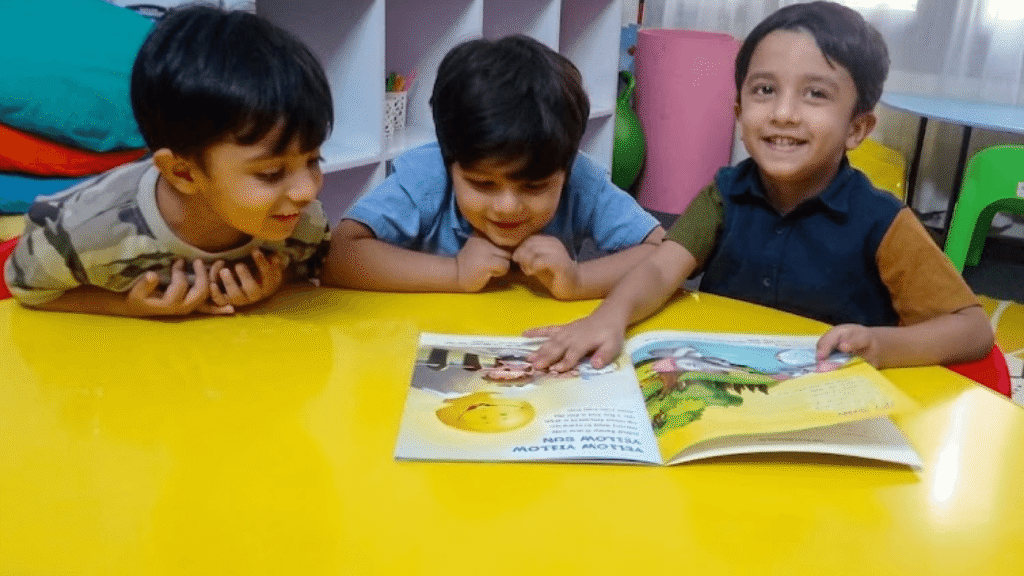
A four-year-old can spend twenty minutes carefully building a tower from blocks, another ten minutes pretending the floor is lava, and then suddenly refuse to sit through a five-minute worksheet.
For many parents, this can be confusing. Is my child learning enough? Should preschool involve more writing?
Why does my child learn so much when they’re playing but lose interest when asked to sit still?
The answer often comes down to how young children learn.Good preschool activities aren’t simply ways to keep children busy. When thoughtfully planned, they give children opportunities to move, experiment, communicate, create, solve problems and make sense of the world around them.
That is particularly important when families are choosing a preschool in Multan, where parents may be looking for an environment that balances early academics with confidence, social development, creativity and practical skills.
What Are Preschool Activities?
Preschool activities are age-appropriate learning experiences designed to help young children develop skills through play, exploration, movement, conversation and hands-on practice.
For a three- or four-year-old, learning might look like sorting buttons by colour, building a structure with blocks, tracing letters in sand, identifying shapes, watering plants or working with classmates on a simple project.
The activity may appear simple to an adult. For the child, however, several skills can be developing at the same time.
A shape-matching game, for example, can involve visual recognition, hand-eye coordination, vocabulary, concentration and problem-solving—not just learning the names of shapes.
Why Do Preschool Activities Matter?
Young children learn through active interaction with people and their surroundings. Activities allow them to practise skills instead of only hearing about them.
A child who is pouring water between containers is experimenting with quantity. A child building with blocks is making decisions about balance and structure. A child working with another child is practising communication, patience and cooperation.
This is why effective early childhood learning doesn’t have to separate “learning” and “play” as sharply as adults sometimes do.
1. They develop fine motor skills
Activities such as threading, clay modelling, tearing and pasting paper, tracing, drawing and using child-safe tools can help children practise controlled hand movements.
These foundations are useful later when children begin handling pencils, scissors and other classroom materials with greater independence.
2. They encourage language development
A simple activity can become a conversation.
“What do you think will happen?”
“Which one is bigger?”
“Why did your tower fall?”
“Can you tell me about your picture?”
These small conversations encourage children to describe, compare, explain and ask questions.
3. They build social skills
Preschool isn’t only preparation for reading and mathematics. Children are also learning how to participate in a group.
Taking turns, sharing materials, listening to another child, asking for help and resolving small disagreements are all meaningful parts of early childhood learning.
4. They encourage problem-solving
Instead of immediately giving a child the correct answer, an activity can give them a problem to investigate.
For example, if a block tower keeps falling, the adult might ask, “What could we change?”
The child gets an opportunity to test an idea, notice what happens and try again.
That process is more valuable than simply being told where to put the block.
What Preschool Activities Can Children Do in Multan?
Families looking for preschool activities in Multan don’t necessarily need complicated or expensive resources. Some of the most valuable experiences can be built around everyday materials and the child’s immediate environment.
Sensory and hands-on activities
Young children naturally explore through their senses.
Preschool classrooms can use activities involving:
-Sand and textured materials
-Water play
-Clay and play dough
-Natural objects
-Colour mixing
-Sorting and matching
-Simple cooking or food-related activities
-Safe sensory trays
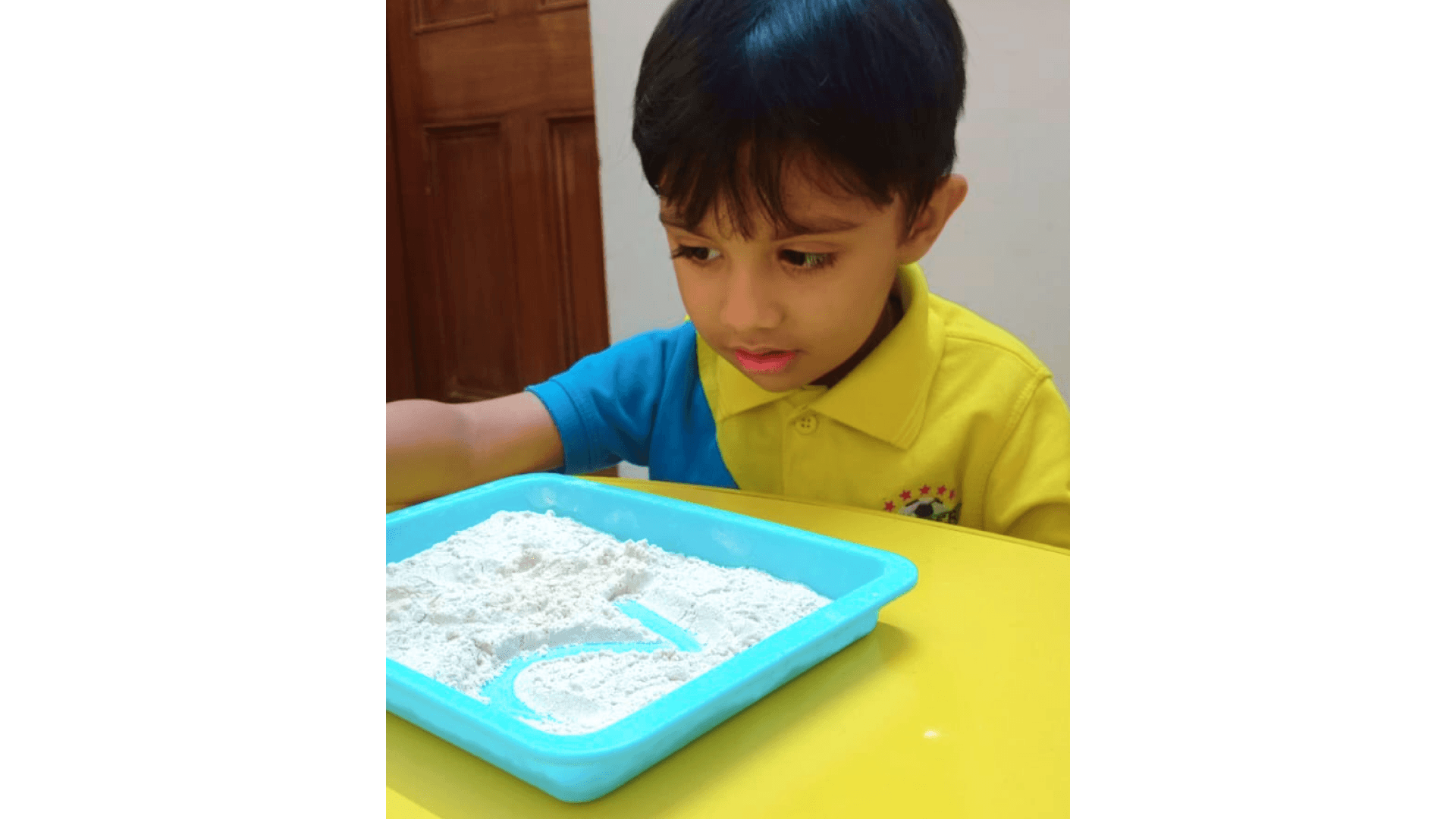
For example, tracing letters or shapes through a tray of sand can combine sensory exploration with early writing practice.
Art and creative activities
Art gives children a way to make decisions rather than simply reproduce a finished example.
Children can experiment with:
-Painting
-Drawing
-Collage
-Clay modelling
-Printing
-Cutting and pasting
-Nature-inspired artwork
The objective shouldn’t always be a perfect-looking craft. The process—choosing materials, experimenting and explaining what they made—can be equally important.
Early maths activities
Preschool mathematics can begin long before formal arithmetic.
Children can explore mathematical ideas by:
-Sorting objects
-Matching quantities
-Comparing sizes
-Identifying shapes
-Counting everyday objects
-Creating patterns
-Grouping items by colour
-Exploring more and less
A teacher might place one group of objects beside another and ask children which has more. Instead of simply memorising a number, the child gets to see the concept.
Language and literacy activities
Early literacy can be playful.
Activities may include:
-Picture-book reading
-Rhymes
-Story discussions
-Letter recognition
-Sound games
-Sand or tray tracing
-Picture sequencing
-Urdu and English vocabulary activities
For preschoolers in Pakistan, exposure to both Urdu and English can also be incorporated naturally into classroom routines, stories, songs and conversations.
STEAM activities
STEAM—Science, Technology, Engineering, Arts and Mathematics—can be introduced to young children without turning preschool into a technical classroom.
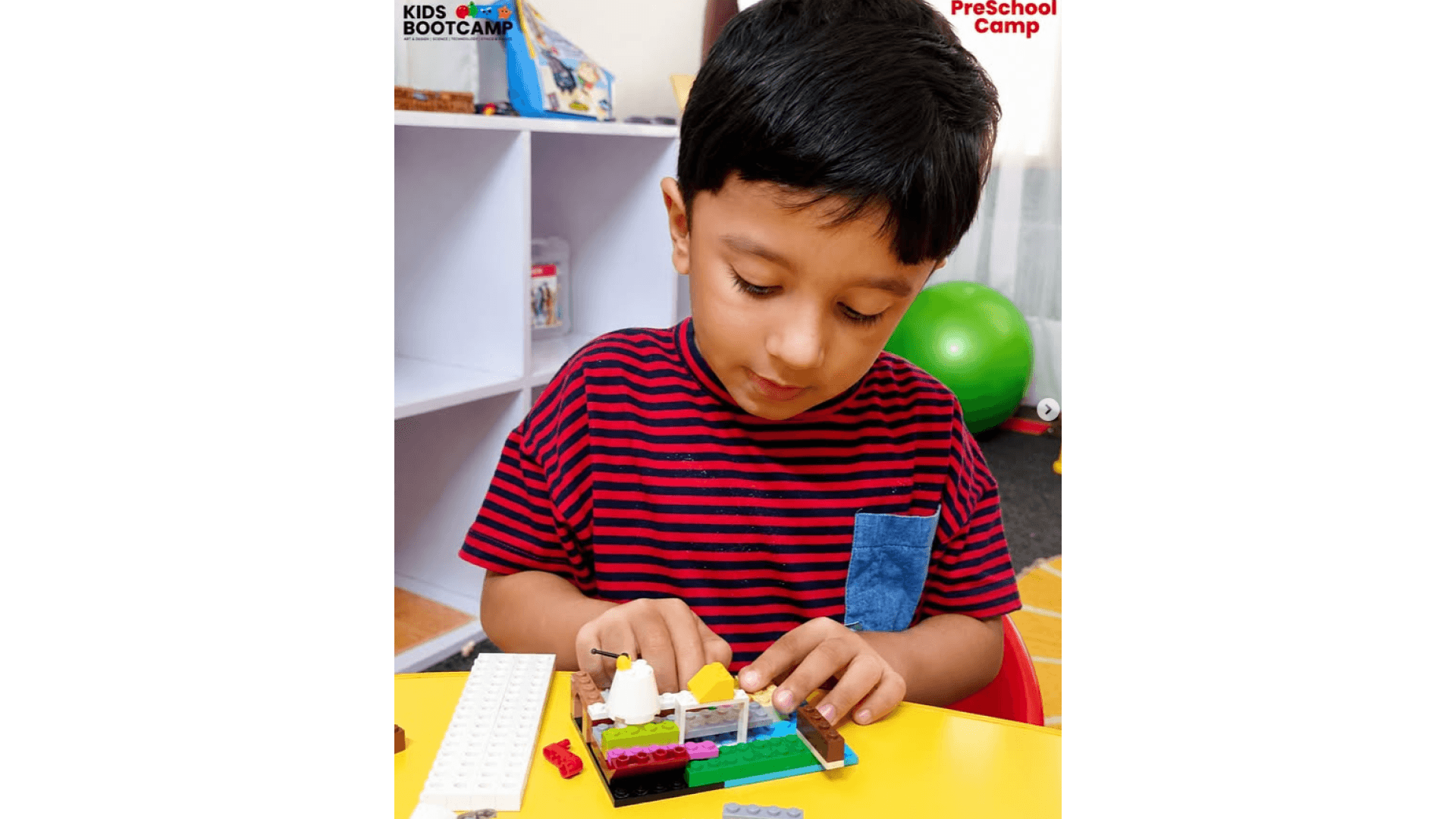
A simple building challenge can involve engineering and mathematics. Mixing colours introduces basic scientific observation. Creating a model from recycled materials combines design, creativity and problem-solving.
The emphasis should remain age-appropriate and hands-on.
What Makes a Good Preschool Activity?
A good preschool activity isn’t necessarily the one that looks the most impressive in a photograph.
It should have a clear developmental purpose while still leaving children room to explore.
Parents can ask:
Does my child get to do something?
Hands-on participation is generally more meaningful than watching an adult demonstrate everything.
Is there room for choice?
Children benefit when they can make small decisions about materials, colours, construction or the way they approach a task.
Is it appropriate for their age?
A preschool activity shouldn’t feel like a primary-school worksheet simply because adults want visible academic output.
Can children make mistakes?
Activities should allow experimentation rather than making children afraid of getting the “wrong” answer.
Does the adult interact with the child?
A thoughtful teacher observes, asks questions and extends children’s thinking instead of taking over the activity.
How Should Parents Choose a Preschool in Multan?
Choosing a preschool involves more than looking at the classroom, fee or number of worksheets sent home.
When visiting a preschool in Multan, watch what the children are actually doing.
Are they moving around appropriately? Are teachers speaking respectfully to them? Are children given opportunities to ask questions? Is there time for creative work, physical movement and social interaction?
It is also worth asking how the school approaches:
-Early literacy
-Early mathematics
-Social-emotional development
-Outdoor or physical activity
-Creative expression
–Classroom routines
-Screen use
-Parent communication
-Safety and supervision
-Individual differences between children
A strong preschool should be able to explain why it uses particular activities, not simply tell parents that the children “have lots of activities.”
Preschool Activities in Multan Need Local Thinking Too
Early learning doesn’t happen in isolation from a child’s environment.
In Multan, families and schools have to consider the local climate, routines and community. During particularly hot periods, for example, physical and outdoor experiences may need to be planned around cooler parts of the day, with indoor activities providing meaningful alternatives.
Local experiences can also become learning opportunities.
Children might explore plants, observe insects, talk about fruits and vegetables, investigate weather, work with natural materials or learn about their community.
A child doesn’t need an expensive educational toy to investigate the world.
Sometimes a mango, a handful of soil, a few blocks or a cup of water can become the starting point for a surprisingly rich learning experience.
How Can Parents Continue Preschool Learning at Home?
Parents don’t need to recreate a classroom at home.
Instead, look for opportunities already present in everyday life.
While preparing food, ask your child to identify colours, count pieces or compare sizes. During a walk, look for shapes, leaves or insects. While tidying toys, ask your child to sort objects into groups.
Even a few minutes of purposeful conversation can turn an ordinary routine into a learning opportunity.
The important thing is not to turn every moment into a lesson. Children also need unstructured time to play, imagine and simply be children.
How Can Parents Continue Preschool Learning at Home?
Children develop at different rates, so age should be treated as a general guide rather than a strict timetable.
| Age | Suitable activity examples | Skills being encouraged |
|---|---|---|
| 3 years | Sorting, sensory play, simple puzzles, rhymes | Language, coordination, attention |
| 4 years | Shape matching, clay, tracing, counting games | Fine motor skills, early maths, creativity |
| 5 years | Building challenges, story sequencing, simple experiments | Problem-solving, communication, early academic skills |
The same activity can also be adjusted according to a child’s ability.
A three-year-old might simply match two shapes. An older preschooler could classify several shapes, describe their properties and create a picture using them.
What Parents Should Look For Beyond Academic Activities
One of the easiest mistakes when evaluating preschool is focusing only on visible academic work.
A child holding a pencil correctly, recognising letters or counting to ten is useful. But preschool also provides opportunities to develop less visible skills.
Can the child:
-Ask for help?
-Wait for a turn?
-Follow a simple routine?
-Express an idea?
-Try again after making a mistake?
-Work alongside another child?
-Take responsibility for simple classroom tasks?
-Communicate what they need?
These skills matter because school readiness isn’t simply about knowing letters and numbers. Children are also preparing to participate in a learning community.
A Better Way to Think About Preschool
Imagine two children given the same pile of blocks.
One immediately begins building. Another watches. A third starts sorting them by colour.
There isn’t necessarily one “correct” way to approach the activity.
A thoughtful early-learning environment gives children enough freedom to explore while teachers provide the structure and questions that help extend their thinking.
That balance—structure without unnecessary pressure, and freedom without a lack of purpose—is one of the most important things parents can look for when exploring early childhood programs.
For families searching for preschool activities in Multan, the bigger question isn’t simply “How many activities does the school offer?”
A better question is:
“What is my child learning while doing them?”
At Kids Bootcamp & Preschool, activities can be designed around play, exploration, creativity, STEAM and practical experiences so that children have opportunities to build skills while actively participating in their learning journey.
If you’re exploring early learning options, visiting a preschool and observing a real classroom can tell you far more than a brochure. Look at the children, listen to the teachers and ask what each activity is helping children practise.
FAQs
What are the best preschool activities in Multan?
Good preschool activities in Multan include sensory play, art, clay work, shape and number games, storytelling, rhymes, building challenges, nature exploration and simple STEAM activities. The best activities are age-appropriate, hands-on and connected to specific developmental goals.
What age should a child start preschool?
Many children begin preschool around ages 3–5, although the appropriate starting age depends on the child’s development, family circumstances and the program’s structure. Parents should consider readiness for group routines, communication, independence and separation from caregivers.
Are play-based activities useful for preschool children?
Yes. Play can provide opportunities for children to practise language, social interaction, problem-solving, creativity, movement and early academic concepts. The value comes from purposeful play supported by appropriate materials and responsive adults.
What are the best preschool activities in Multan?
Good preschool activities in Multan include sensory play, art, clay work, shape and number games, storytelling, rhymes, building challenges, nature exploration and simple STEAM activities. The best activities are age-appropriate, hands-on and connected to specific developmental goals.
What should I look for when choosing a preschool in Multan?
Look beyond worksheets and decorations. Observe teacher-child interactions, classroom safety, cleanliness, learning activities, opportunities for movement and creativity, social development, communication with parents and how the school responds to individual children’s needs.
Can preschool activities improve fine motor skills?
Activities such as drawing, threading, clay modelling, tearing paper, puzzles and age-appropriate cutting can give children opportunities to practise hand and finger coordination. These skills support later tasks such as writing and using classroom tools.
How can I do preschool activities at home?
Use everyday objects rather than buying specialised equipment. Sorting laundry by colour, counting fruit, building with blocks, reading together, drawing, making simple patterns and discussing what children observe outdoors can all provide useful learning opportunities.
Are STEAM activities appropriate for preschoolers?
Yes, when they are adapted to the child’s developmental level. Preschool STEAM can involve building, observing, sorting, experimenting, creating and asking questions rather than formal technical instruction.
How important are social skills in preschool?
Social skills are a major part of early childhood development. Children have opportunities to practise sharing, turn-taking, communication, cooperation, listening and managing everyday interactions with peers and adults.
