Kids Bootcamp Teaches Best Kids Coding in Pakistan
Kids Bootcamp Teaches Best Kids Coding in Pakistan
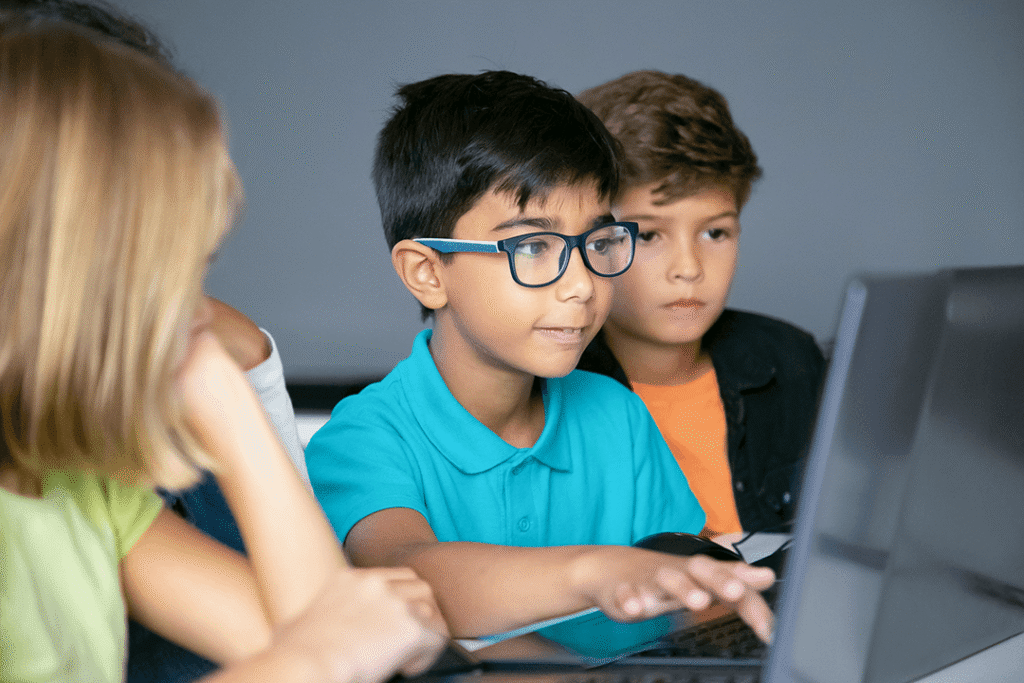
At Kids Bootcamp, we focus on one core goal before anything else: helping children understand how to think like a programmer, not just how to use a tool.
Most kids in Pakistan don’t struggle with technology itself—they struggle with logic, sequencing, and structured thinking. So instead of starting directly with software, we build the foundation step by step in a fun, engaging, and activity-based learning environment.
The purpose is simple: before children write code, they must first understand how thinking in code actually works.
This approach is what makes kids coding in Pakistan more meaningful, practical, and future-ready.
Step 1: Building Coding Logic for Kids in Pakistan Without a Computer
Before introducing any coding platform, children first go through hands-on activities that build programming logic naturally.
At this stage, we avoid screens completely so that children focus purely on thinking.
We use:
- Step-by-step instruction games
- “If this happens, what will you do?” challenges
- Pattern recognition activities
- Story sequencing exercises
- Classroom problem-solving games
These activities may look simple, but they are powerful.
Through them, kids begin to understand one of the most important foundations of programming:
Every action has an order, and changing the order changes the result.
For example, if a child is told:
“Pick up your bag, open it, then pack your books,”
they quickly realize that changing the order breaks the task.
This is the same logic used in coding.
At Kids Bootcamp, we ensure that children don’t just follow instructions—they start questioning and understanding them.
This is the first step in developing coding for kids in Pakistan in a meaningful way.
Step 2: Teaching Kids Sequencing and Instruction-Based Thinking
Once children are comfortable with basic logic, we introduce structured thinking.
This is where we start shaping their minds to think like programmers.
They learn how to:
- Break big tasks into small steps
- Follow instructions in a correct order
- Understand cause and effect relationships
- Give clear and precise commands
We use real-life examples to make learning easy.
For example, instead of saying “make tea,” children are guided to break it into logical steps:
- Boil water
- Add tea leaves
- Add milk and sugar
- Stir and serve
This exercise teaches a very important lesson:
Coding is nothing more than giving clear, structured instructions to a computer.
If instructions are unclear or out of order, the result will be wrong—just like in programming.
At this stage, children begin to understand why clarity and sequence matter in everything they do.
Step 3: Kids Coding in Pakistan – Learning Decision Making and Problem Solving
Next, children are introduced to one of the most powerful concepts in programming: decision making.
This stage is crucial because it teaches children how computers “think.”
They begin practicing questions like:
- “If something happens, what should be the response?”
- “What if this condition is true or false?”
- “How do I solve this problem step by step?”
These simple questions build strong foundations for:
- Logical reasoning
- Critical thinking
- Debugging mindset
At Kids Bootcamp, we encourage children to make mistakes and learn from them. This is important because in coding, errors are not failures—they are learning opportunities.
For example, if a child’s solution doesn’t work, we don’t immediately correct it. Instead, we ask:
- What did you expect to happen?
- What actually happened?
- Which step might be wrong?
This trains their brain to think like a problem solver.
Over time, children stop memorizing answers and start analyzing problems, which is a key skill in kids programming education in Pakistan.
Step 4: Developing Creativity in Kids Coding Education in Pakistan
After logic and problem-solving are established, children move into creative thinking.
This is where coding becomes exciting and imaginative.
At this stage, kids:
- Design simple game ideas on paper
- Create story concepts
- Think about characters and rules
- Plan interactive activities
We encourage children to think beyond instructions and start designing their own ideas.
For example:
- “What kind of game would you like to build?”
- “What should the character do when it wins or loses?”
- “How can we make this story interactive?”
This step is very important because it shows children that coding is not just technical—it is also creative.
In fact, most modern apps, games, and digital products start with imagination first.
At Kids Bootcamp, we help children realize that they are not just users of technology—they can become creators.
Step 5: From Thinking to Real Coding Skills for Kids Coding in Pakistan
At this stage, children are ready to connect their thinking with digital tools.
Now they are not overwhelmed by software because they already understand the logic behind it.
They can easily grasp:
- How instructions control actions
- How decisions affect outcomes
- How repetition simplifies tasks
- How problems can be broken into smaller parts
This is the moment where real coding understanding begins to form naturally.
Instead of struggling with concepts, children now recognize them instantly.
For example:
- A repeated action becomes a loop
- A condition becomes a decision rule
- A sequence becomes a program flow
This smooth transition is what makes Kids Bootcamp different from traditional learning methods in kids coding in Pakistan.
Final Step: Coding Tools Used at Kids Bootcamp Pakistan
Once children have a strong foundation in logic, sequencing, problem-solving, and creativity, we introduce coding platforms to bring their ideas to life.
At this stage, tools are no longer confusing—they become exciting.
At Kids Bootcamp, we use:
Scratch
Scratch is a visual programming platform where children use drag-and-drop blocks to create:
- Animations
- Interactive stories
- Simple games
- Creative digital projects
Scratch helps children understand coding without worrying about syntax. It allows them to focus on logic and creativity at the same time.
CodeMonkey (Monkey Code)
CodeMonkey is a game-based coding platform where children solve puzzles and challenges by writing simple commands.
It helps strengthen:
- Logical thinking
- Step-by-step problem solving
- Early text-based coding concepts
- Understanding real programming structure
Through CodeMonkey, children gradually transition from visual coding to actual coding thinking.
Why This Method Works for Kids Coding in Pakistan
The reason this approach is successful is because it follows a natural learning flow:
- Thinking without technology
- Understanding logic through daily life examples
- Building problem-solving skills
- Developing creativity
- Introducing coding tools at the right time
Most children in Pakistan struggle with coding when they are directly exposed to tools without understanding logic.
Kids Bootcamp solves this problem by building the foundation first.
This ensures that children don’t just learn coding—they truly understand it.
Conclusion: The Future of Kids Coding in Pakistan Starts with the Right Foundation
The future of technology in Pakistan depends on how early we prepare our children.
Coding is no longer just a technical skill—it is a way of thinking.
At Kids Bootcamp, we believe every child has the potential to become a creator, not just a consumer of technology.
By teaching logic first and introducing tools like Scratch and CodeMonkey at the right time, we help children build:
- Strong thinking skills
- Problem-solving ability
- Creativity and imagination
- Confidence in technology
These Skills benefit kids in future. This is how the future of kids coding in Pakistan is being shaped—one child at a time.
